Showing posts with label Piano. Show all posts

Tuesday, August 20, 2013

Maurizio Pollini Live in Salzburg

Solo Recital: Maurizio Pollini, pianist
Saturday, August 17, 2013
Großes Festspielhaus Salzburg
9pm

Program:
Schumann - Kreisleriana, Op. 16

Schumann -Piano Sonata no. 3 in F minor, Op. 14 (Konzert ohne Orchester)

Intermission

Chopin - Piano Sonata no. 2 in B flat minor, Op. 35 "Funeral March"

Chopin - Berceuse in D flat, Op. 57

Chopin - Polonaise in A flat, Op. 53
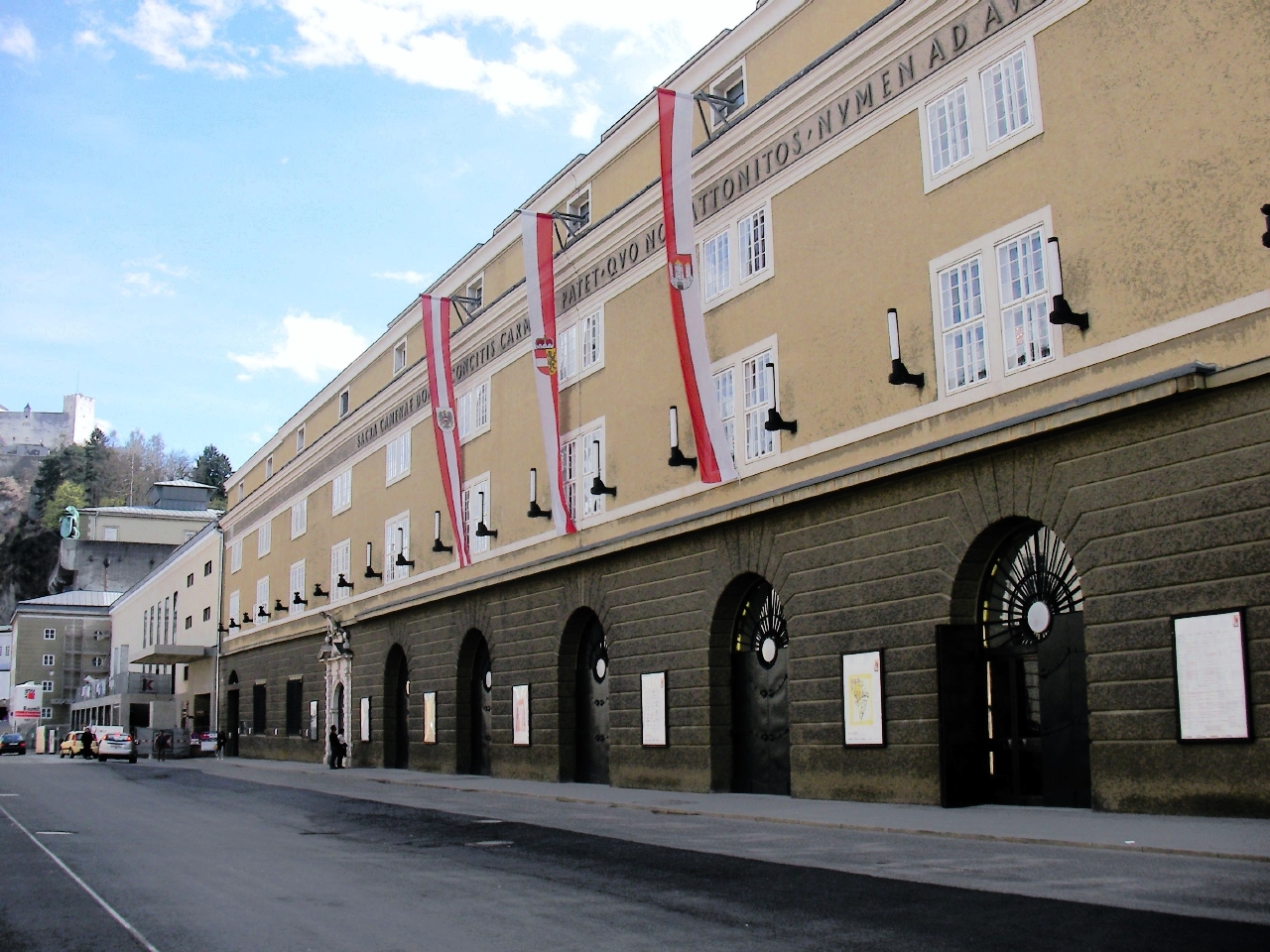
Some 2,200 people turned out in their best attire at the Großes Festspielhaus Saturday night to hear what was tauted to be one of the great musical events of the year. Maurizio Pollini's recital at the Salzburg Festivals this year was one of its centerpiece concerts, along with the Mahler Symphony Cycle and the emphasis on El Sistema. The recital both was and was not what I hoped it would be, but we can talk about that after a brief overview of all the pieces.

He came out on stage to thundering applause, bowed quickly and charged into the stormy opening of Kreisleriana before he had completely sat down at his personal Fabbrini Steinway. He must have done something wrong in his rush to get started because he played almost exclusively wrong notes for the first four phrases of the piece. It flew by so quickly he couldn't get his bearings, wisely skipped the repeats, and reset himself for the B section, which was moderately better but disturbed. The return of the A section was hardly improved. From where I sat on the left side of the hall, I could see his shaking and uncertain hands rushing from one place to another, trying to find the right notes. The second movement was very beautiful in the slow themes, but the faster intermezzi were weak in every sense of the word. Although the third movement and most other fast movements of this piece were much better "technically," I could hear nothing but a wall of sound being thrown at me. The pedal was cleared at most once a measure, and he made no apparent effort to bring out any particular voice. Perhaps this was an attempt to cover up any more flubs? Nevertheless, his fifth and sixth movements were so good that they redeemed the entire piece for me. I have never heard those figures at the opening of the fifth in particular played so well. He completely did away with the pedal and let that glorious piano of his shine for what it is. It was spooky! The last movement began very well. The single sixteenth notes in the right hand sounded like grace notes (an interesting and satisfying effect), but as the piece went along he lost the 6/8 feeling and instead started to play as though in 2/4 - i.e. with two equal eighth notes per beat separated by a grace note.

I see I am getting a little wordy here. Suffice it to say that the Schumann Sonata was infinitely superior to Kreisleriana. At intermission we learned that Mr. Pollini was quite sick and was ready to cancel the concert, but after significant convincing from the audience and management, he decided to play the second half after all. Aren't we all glad he did! His Chopin Sonata was a marvel of pianism. He knew exactly the sound he was going for and drove forward through the piece relentlessly, maintaining a strong sense of pulse, which can be an especial challenge with this sonata. The second movement was smooth and effortless. The third "moved" a bit more than I was used to, but to good effect. The fourth was so quiet that I was unable to pinpoint exactly when it started: it seemed to fade in from nothing, like some creature darting here and there in the fog.

As said, Pollini's playing through all of his pieces, no less in the Berceuse and the Polonaise, was very fine for the most part. His sound was very carefully crafted, note by note, and he had a good amount of energy to move the pieces forward (often rushing to an extreme!). His interpretation of little things here and there was quite unusual, and I dare say he would not advance very far in an international competition against today's generation of the newest hotshot pianists like Daniil Trifonov, Benjamin Grosvenor, Sean Chen, or Vadym Kholodenko. It's hard to say. He is very old, but I wouldn't say that he is past his prime. His playing made an impact on me, but it didn't move me. He is a very calculated, intellectual player, a fine artist to be sure, but the performance lacked something I needed - an emotional connection with the audience which, I claim, is critical to become a really transcendent performer.

What do you think? Do you have to be emotionally involved in the music in order to "make music"? Voice your opinion in the comments below.

Rupley's Rating:

Thursday, August 8, 2013

Fellner Fills Big Shoes at the 2013 Salzburg Festival

Solo recital: Till Fellner, pianist
Wednesday, August 7, 2013
Großes Festspielhaus Salzburg
9pm

Program:
J. S. Bach - Well-Tempered Clavier II, nos. 1-4
            Prelude and Fugue in C major BWV 870
            Prelude and Fugue in C minor BWV 871
            Prelude and Fugue in C sharp major BWV 872
            Prelude and Fugue in C sharp minor BWV 873
W. A. Mozart – Piano Sonata in F major, KV 533/494

Intermission

F. J. Haydn – Piano Sonata in B minor, Hob. XVI:32
R. Schumann – Symphonic Etudes, Op. 13

Pianist Till Fellner had no easy task in front of him in preparing a recital program on such short notice that would satisfy the 2,500 disgruntled music lovers who had purchased tickets to see legendary pianist Evgeny Kissin perform live in the Großes Festspielhaus last night, a recital which was to be one of the highlights of this year’s Salzburg Festivals. Kissin had canceled the performance three days prior due to a “critical finger injury” leaving him unable to play. As his first solo concert in over a year, Fellner daringly chose a program of mostly “personal premieres”, excepting the Bach set, which he learned about the time he released his recording of WTC I under the ECM label in 2004. Curiously, the Bach was the most questionable set on the program – his heavy use of pedal throughout most of the pieces, although carefully cleared now and then to maintain the independence of the contrapuntal lines, did obscure the ornamentation, muddy the texture a little and make more some too-bell-like long notes. Most people I talked to agreed that it was too much. Still, the warmth of tone he was able to create with it was captivating – especially in the C sharp and C sharp minor preludes and fugues. His skill in developing an intense, churning fugal texture is first-rate; the preludes, by comparison, were rather flat and seemed poorly thought-out.

The tremendously difficult, exposed, cheerful opening line of the Mozart was very carefully executed, but I could hear him shaking as he played it. For most of the first movement, his lines were uneven and forcedly cheerful, and the dynamic range was narrow. He got gradually better as he went, finally closing out the movement quite nicely. His second movement was the highlight of the evening: absolutely brilliant. His tone was stunning; varied; directed; full of sensitivity, pain, and happiness. It was everything that one could have dreamed of hearing at the festival – to my young ears, in any case. Not everyone was equally enraptured, and I heard more rustling of programs during the B section of that movement than at any other time during the concert. After the final movement came intermission.

After intermission, he played a lovely Haydn sonata that I was personally unfamiliar with, and which I did enjoy. His final piece were the devilishly hard Symphonic Etudes by Robert Schumann, which was obviously his most immature piece. All of the “impossible parts” he played flawlessly, but the lostness, the forced phrasing, the mechanical pounding out of notes and even a memory lapse managed to work themselves into the darker corners of the performance. My favorite parts of the piece were disappointingly unmusical, but there were other moments I had never noticed before that were truly beautiful. Such is life in the world of live performance!

At the end of the concert, he bowed four times before the audience finally convinced him to play an encore, a thing which he should not have been expected to do on such short notice. He played the Sarabande from Bach’s A minor English Suite, and he was clearly unprepared. It sounded tired, shaky, and uneven. There were some beautiful, musical moments in it, but for the most part it was weak. The entire audience felt this with me, too, because the stopped clapping and were heading out the door before he even made it to the stage door. To be fair, it was a long walk to get offstage.

So, what’s the final opinion? In that same 1836 article by Schumann, he writes that criticism always has a million letters more than praise. Such is the case here, sadly enough. His performance was worthy of the stage he was on, and the audience enjoyed his performance very much, a thing I was skeptical of when going into the hall, seeing all the bored faces. There’s nothing more difficult as a performer than substituting for a world-famous artist at a sold-out concert.


Rupley’s Rating: 

Let's Turn the Page...

A quote I ran across today by Robert Schumann sums things up just about perfectly. Roughly translated, it read:

"The best way to talk about music is to say nothing."

That, of course, was published in the Neue Zeitschrift für Musik, a tremendously successful and long-standing publication of music criticism founded by Schumann in April, 1834 and still publishing to this day. He goes on to qualify his statement, in order to dispel some of the inherent irony:

"Consider, however, that we have a responsibility to Chopin [and, by extension, all other composers], and that the great public, seeing our silence, rather than observing our awe of this music, would come to a somewhat different conclusion about us." (Schumann, Robert: Schriften über Musik und Musiker, Joseph Häusler, ed. Philipp Reclam jun. Stuttgart, 2009. 89-90)

Over the next few pages, he describes the greatness of the task of honoring music with speech. I suppose one could say I have been doing that already, but I think "complaining" about music is more accurate. I have decided, in short, to begin using this blog as a means of publishing music criticism, probably the only thing I know enough about to write a blog on. Unfortunately, I am no position to analyze and comment on new compositions as Schumann so deftly did, but I hope to share the musical ear I have been working for so many years to develop with all of you because when you get down to it, I believe that the current inattention to the so-called Classical Music World is due not to a lack of quality in the art being produced - on the contrary, I find it to be the genre with the highest standard of all - but because of an underdeveloped musical ear in the audience. I will share my thoughts in the form of a review and discuss how I go about listening to music to get the most enjoyment out of the finest performances on earth.

Thursday, December 20, 2012

"Let me try this out on you..."

Tonight, on our way to Denny's, I dropped by my practice room to drop off some unnecessaries.  The two young ladies with me, having just learned that I play the piano, wanted me to try something.  Well, the only thing I've been working on seriously solo-wise lately is Scarbo....  why not?  It sounds great when I play it for myself.  So, I set out into it.

As any of us could have predicted, it was a trainwreck.

I've thought more and more lately about why we as humans can play something so well when it's just us around and totally blow it the moment others show up.  It's not always the case, and in fact (I'm only speaking for myself on this one) I observe that the trainwreck is worst on the first run and aligns to what I do alone in the practice room more and more as I play the piece more.

This is all very obvious, still.  Let's get down to some deeper thought here.  Identify the problem and the answer will resolve itself 9 times out of 10.  What exactly happens?

  • First, those repeated notes at the beginning were starting to sound like something out of a Dusapin etude... impossibly erratic, never more than 3 out of every 4 notes sounding, as many different dynamics and tone qualities as there were notes.
  • It was at least 20% faster than I have practiced it.  Some parts were probably even faster than I intend to ever perform them in concert.
  • There were innumerable wrong notes, particularly when the hands are crossed or on top of one another (which is, to my great frustration, more than half of this piece).
  • I got lost twice, had to backtrack a measure or two, and keep going.
Much of this was to expected in any case.  You don't perform Scarbo after working half-heartedly on it for a month.  Also, the repeated notes were obviously not together because I hadn't warmed up.

Tempo is a different issue, and its cause is different in different people.  The two main reasons I observe, for example, when my students will bring a piece to their lesson and play it way faster than they have obviously been practicing, are nervousness and pride.  The nervousness comes in both from a feeling of shyness and the "this piece is really hard...gracious sakes I hope I can get through it..." attitude.  If a piece is hard, it gets over faster if you play it faster; also, at least with me, I find that if I don't know a piece of music, it's not going to sound good at any tempo.  So I might as well play it fast.  The pride is not a bad kind of pride; instead, it is that you have worked hard on the piece for a good while and you want to show to your first audience how much progress you've made so far.  This combines with the understanding that it's just a casual run-through, creating the perfect storm.  Sloppiness takes over. Tempo flies off the charts as you try to give your new audience a sense of the piece, and you yourself are incapable of taking it at that tempo... yet. But hey, they all say that if you can play a piece slow you can play it fast as well, right?  Wrong (well, to an extent).

I feel perfectly comfortable playing for myself when it's just me in the room, and sometimes when there are only other pianists there too.  When non-pianist friends drop by to hear my poundings, I somehow lose my mind and end up playing the music the way I played everything four years ago.  Old habits die hard, though.  Especially when the piece is as through-and-through-awesome as Scarbo.

Steps to preventing a repeat offence?  I can't say there's a magical series of cures.  Speaking for myself, I can make some comments.  In my playing, when it's just me who's present, I strive for absolute correctness, clarity of tone and touch, and intelligent structure to the section I'm practicing, regardless of tempo and to a degree regardless of dynamic and other, more polished expression.  There are plenty of times when that alone is my focus - those aspects of music are just as valid as the black dots on the page - it's just that I don't have the mental capacity to critically focus on every aspect of playing at once. So I limit myself somewhat, when I am in the practice room, mostly to just playing the notes well.  Once another person shows up, however, my extreme social nature urges me to focus on communicating.  Well, the mind is like a small plate at a Thanksgiving feast, and so in order to communicate with these fellow human beings, things get pushed off the plate: note accuracy and control/moderation of tempo, first of all.

The important thing this early in the game is to become accustomed to playing well in front of other human beings.  I can communicate naturally, in most circumstances, and I have also learned how to practice that alone.  Maybe I'll post on that someday.  The point is, I need to tell myself that since accuracy and control/moderation of tempo are my greatest difficulties in my art, that these must be my primary focus when I have the opportunity to "try out" a piece on someone early on in the process of learning something.

The ladies left, chuckling to themselves and pointing out how interesting and cool the piece is; they avoided commenting on the execution altogether.

Friday, August 3, 2012

Repeat after me: "aahh mooo shaaah raahhh taaah kaaahhh. Foosa, semiminim, counterpoint." There. Problem solved.

If I had a nickel for every time someone asked me how to practice, I could start my own conservatory. How do I answer? "I really don't know." People think this is silly... It probably is. There really are certain guidelines for practice, which I always make sure to mention after my initial answer, but a universal practice theory is a surprisingly well-kept secret; or, perhaps, no one really knows how we learn as musicians and the great pianists are only so by chance.

The people who ask me that question obviously ask it because they believe it can be answered in words. Can it? One who has never heard the cello before can know that a cello is a musical instrument in the string family; that it has four strings tuned to C2, G2, D3, and A3; that it is the instrument closest in range and resonance to the human voice; one may even be able to express the importance of the exact shape of the f-holes and the difference between a snakewood bow and any other kind of bow... What is the difference between that person and the person who, knowing nothing about the cello, enters a concert hall and is captivated by the beautiful sound of Rostropovich playing the Haydn C major Cello Concerto? Which one knows the cello better? Those who understand music understand it by experience only.

When you have practiced well, you have experienced good practice. I feel that trying to put labels on it gives the wrong impression.

When I practice (I have no idea if this is a detrimental strategy or a useful one. You decide), it seems that the task of learning a piece of music is divided into two separate goals: notes and everything else. Learning the notes is the most analytical and in some cases is quite a challenge. It is easier, for example, to learn the notes to the first Mozart piano sonata than to learn the notes to Lemma-Icon-Epigram by Brian Ferneyhough. There are two strategies that I have tried, and both work. One is to learn one page at a time and perfect it before moving on. At the suggestion of a blog by one of Sviataslov Richter's friend, I did this with the middle movement of the Rachmaninoff 2nd piano concerto. It was a challenge to my patience to only learn two pages per day but certainly rewarding once I learnt the last page and could suddenly play an entire movement. The emphasis is on learning everything correctly at the outset to cut down on time spent undoing badly learnt passages later. Artur Rubinstein, on the other hand, recommended learning an entire work all at once and memorizing it as quickly as possible. Why? To get a grasp of the entire work right from the outset. This, I feel is a strategy to adopt later on once a pianist is more mature.

The main obstacle I see in making progress toward understanding something more of the way we should practice is that people need to practice differently at different stages of their musical growth; which means that the only people who have been dealing with this issue long enough to come to a good answer can only answer the question for themselves, at their level of advanced maturity. For the younger pianist, things are more or less uncharted.

A major difference between a mature musician and a novice is the finger technique.... How to play octaves, thirds, scales, arpeggios, awkward chords, use the arm, and everything else contained in Liszt's book of technical exercises. If you have all of that stuff down, the much of the rest is often a piece of cake. Even if it's not easy, it's fun.

Studies show that people who sightread daily learn and memorize music more easily than those who do not. So, the first steps toward a great practice experience is to work through technical exercises such as the Liszt exercises and sightread every day. The most productive sightreading practice I have ever had has been reading through the Well-Tempered Clavier on my own and through the concerto literature with another pianist.

Obviously learning the notes is just the beginning; the daunting and all-inclusive "everything else" yet remains. In the beginning, a young pianist is most aware if the notes. As time progresses, he begins to notice the difference between the so-called "musical" playing and its opposite. There is a slowly increasing awareness of what a "good sound" is and how to create it. Over the years, the "learn the notes" and the "everything else" combine into one single task. As the pianist matures, he automatically plays with a good sound and with more and more ease of expression.

I've been rambling awhile, I know. All this is to set up my theory of practice. Too many people think that if they just learn that one secret practice technique, the pianistic panacea, all their practice will be efficient and effective. Sure, certain techniques can be helpful for learning to play notes evenly or quietly or whatever (I only have one practice technique per se; I will talk about it in another post),but that's certainly not the case. The most important factor in accomplishing what you set out to do at the piano is total focus. Of course the young pianist will think he is focused when he isn't. Once he has experienced that total focus, he will realize with delight that he has been efficient and effective.

To tie this in with my somewhat-enigmatic post title, there is no magic spell that helps you practice. You find a routine that helps you focus; that is all that is important. Focusing well can shave hours and hours off of your necessary amount of practice time to get a piece performance-ready.

Focus is the key factor in understanding the piece you play. The ambiguous "everything else" is all of the phrasing, "structure", quality of sound, and dozens of other aspects of music I have yet to explore. This side of music, sadly starved by many people who can't seem to tap into their intuitive musical expression, is where the real art of pianism lies. You can only get to know someone by spending time with them. You can only get to know a piece of music by studying it, at and away from the piano, pondering on and puzzling over it, letting it astound and continually teach you, letting it speak to you, letting it grow with you. The goal of practice is to make the music become a part of you. When you understand this, practicing comes naturally.

Tuesday, July 31, 2012

The not-so-romantic-as-one-might-think life of the 21st century pianist.

It's a little after 10pm, and I'm here in one of the practice rooms at UNM playing bits and pieces of the 4th Chopin Ballade under tempo. I keep thinking, "why didn't I ever realize I was supposed to phrase it like this before?" It's amazing what preparing for a competition will do to you. I have learned more about phrasing on this piece in the last 12 hours that I've been here than in the last few months I've spent on the piece.

It's not my first competition, but it's my first international competition. I don't know that there's any real difference (MTNA pays more prize money by far, and it's a national competition) except that the word "international" attracts every little hotshot teenager within a few thousand miles to apply. It's the International Keyboard Odyssiad and Festival in Fort Collins, Colorado. So far it seems to be well-organized and have a lot of community support (this is the first year for the competition). We'll see. I leave tomorrow for Colorado, and I'll have a day and a half to prepare there before I perform on Saturday. That word "international" also causes some sort of unusual stress to rise up in me... It's not like I'm going to be the shame of the piano world if I don't place. But I suppose I just want to connect with the judges. The networking is far more important to me than winning or losing, for which I feel I can hardly compete with the prodigies that also were accepted. I'm sure they are nervous too; they are probably all practicing right now too.

I haven't done much of anything with Ravel the last few days for obvious reasons. More on that Monday, probably. Wish me luck! And pray.

Well, back to practice. Goodnight.

Wednesday, July 25, 2012

Taking on Ravel

At Charles' suggestion, it is appropriate that the first posts be about Gaspard de la Nuit.  Having just got back from a very successful trip to perform and study at the 2012 Internationales Klavierfestival Lindlar, I took it into my head that I could learn any piece in the world, whatever I wanted.  Talking with Falko, my piano teacher at the University of New Mexico, Gaspard de la Nuit came up.  Here goes nothing! I bought the Henle edition in Cologne and set to work right away because I didn't have enough to do already with preparing for my first international piano competition, the brand-new International Keyboard Odyssiad and Festival in Fort Collins, which takes place in 10 days.  I need to get back to practicing pretty soon, but I wanted to set the stage for learning Gaspard.

It's a composition by Maurice Ravel, about 30 minutes, I believe, written at least in part with the purpose of creating the most difficult piano piece yet.   Balakirev's Islamey, the final revision having been published in 1902, was all the rage in European concert halls during the early years of the 20th century because it was considered (not without good reason) to be the hardest piece for piano.  Ravel published his Gaspard de la Nuit in 1908.  While it's tough to say definitively which pieces are the most technically challenging, you can still say with confidence that piano music doesn't get more difficult than Gaspard. 

It's not performed often, except by teenage virtuosos from China.  Other pieces that are supposed to be "the hardest ever", like Scriabin's 5th Sonata, the first Chopin Etude, or Beethoven's Sonata Appassionata are played much more frequently. I feel like the number of people who attempt a piece and then give up should be taken into account when determining something that is truly difficult. Then you also need to take into account the people who play a piece badly.

Enough of my rambling. These thoughts aren't unique; they're just wasting space on a hard drive somewhere in San Jose.  But I want to lay out an overture to what my learning Gaspard de la Nuit will look like:

  • Phase 1 - I'm not so sure about this.  But Argerich learned it in 5 days... so maybe I can learn it in a month or so.
  • Phase 2 - Hey! It's just scales and arpeggios! Easy! [where I am now, but only for the next couple of hours]
  • Phase 3 - You know, playing a couple of these scales and arpeggios in a row isn't so easy...
  • Phase 4 - %#&#@(*&!& RAVEL!!
  • Phase 5 - Hey, this isn't so bad. I think I'm getting the hang of this. [this phase totally without warning and lasts only a few days]
  • Phase 6 - Wait. This has to be musical? Crap.
  • Phase 7 - %#&#@(*&!& RAVEL!! [the final phase]
Usually there is another phase inserted somewhere in this list called the "you know, I really shouldn't have cut so many corners when I started learning this piece" phase.  I don't know when that will come up, but I can guarantee it will.

Phase 1 - passed with ease. Josh-1, Ravel-0
Phase 2 - doing pretty well. I'm at the 2 yard line, 1st down.

Well, ladies and gentlemen, good night and good luck.   We'll be seeing more of each other.